How do body shops match car paint exactly?
Quick answer
Shops start from your factory paint code, then refine it: a spectrophotometer reads the actual color off your car (paint fades and varies by plant), software selects the closest formula, and a sprayed test card is checked against the panel under color-corrected light. The final trick is blending into adjacent panels so no edge exists to see.
Why the paint code alone isn’t enough
Two cars with the same code can wear measurably different color: assembly plants vary, and a decade of Minnesota sun fades every finish. Spraying straight from the factory formula onto a faded car produces a visible patch.
That’s why we measure the car itself with computerized color matching and tint the formula to what your paint is today, not what it was on the build sheet.
Blending — the professional difference
Even a perfect mix can show an edge if new paint stops at a panel gap. Blending fades the color into the neighboring panels and clears the whole area, so light rolls across the repair without a transition line.
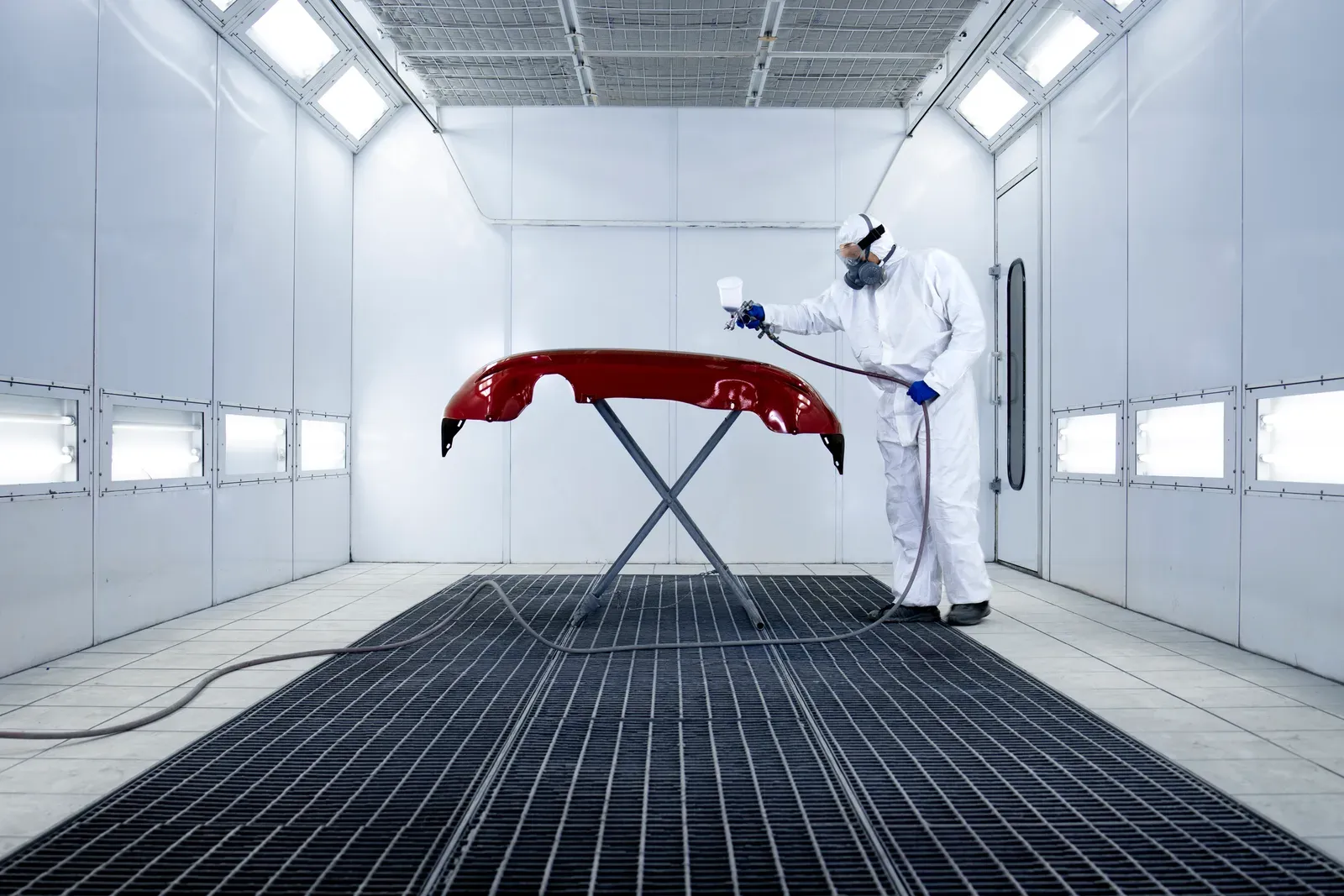
Metallics, pearls, and tri-coat whites and reds demand it — the flake orientation changes with spray angle, which is also why booth technique matters as much as the formula.
How to judge a shop’s color work
Look at their before/after work in the color families that are hardest: silver metallics, tri-coat pearls, and black. Read reviews for the phrase "matched perfectly" — in ours, flawless color match is the single most repeated compliment, and every paint job carries a lifetime warranty.